
Fort Miles and Sussex County's World War II coast
From a named fort to a surrendered U-boat, the war reached Lewes, Rehoboth Beach and the towns around them.
A fort gets its name
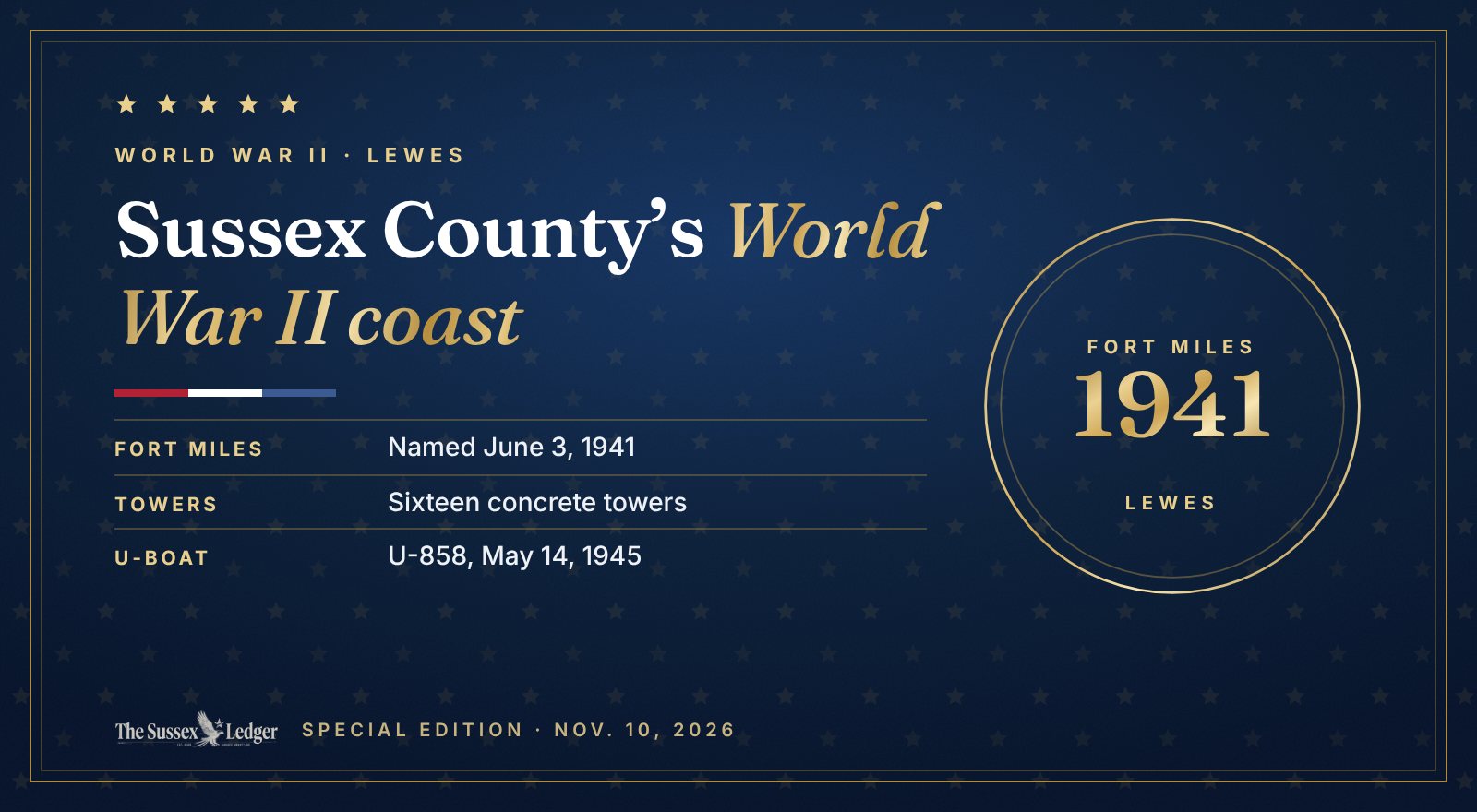
The Cape Henlopen Military Reservation became Fort Miles on June 3, 1941. The post was named for Lt. Gen. Nelson A. Miles. At its peak, more than 2,200 personnel served there.
Sixteen towers, a longer reach
Fort Miles built sixteen concrete fire control towers. The towers stretched the range of its 16-inch guns from about 14 miles to about 25 miles.
A command post in a surf club
Two days before Pearl Harbor, the Harbor Entrance Control Post was set up in the Bell Haven Surf Club at Fort Miles. In June 1943, it moved to Tower #9.
Civilians in the air over Rehoboth Beach
Civil Air Patrol Coastal Patrol Base 2 at Rehoboth Beach flew antisubmarine patrols in 1942 and 1943. Its pilots were civilians. Two of them, Hugh Sharp Jr. and Eddie Edwards, received Air Medals for a rescue attempt. Four of the base's pilots died.
Prisoners in Sussex County
During World War II, prisoner of war camps operated in Sussex County at Lewes, Fort Miles, Bethany Beach, Bridgeville, Georgetown and Fort Saulsbury, according to a list of Delaware camps compiled by GenTracer. The prisoners' labor helped keep the county's economy going during a shortage of male workers, the Cape Gazette reported.
A submarine surrenders off Lewes
On May 14, 1945, six days after Germany surrendered, the German submarine U-858 surrendered off Lewes. Its crew came ashore at Fort Miles.
Why it matters now
Veterans Day honors those who served. In Sussex County, that service includes the soldiers stationed at Fort Miles and the civilian pilots who flew from Rehoboth Beach.
Sources
Found an error? Read our corrections policy and log


